Cloud Hosting vs Vps: What’s the Difference and Which is Faster?
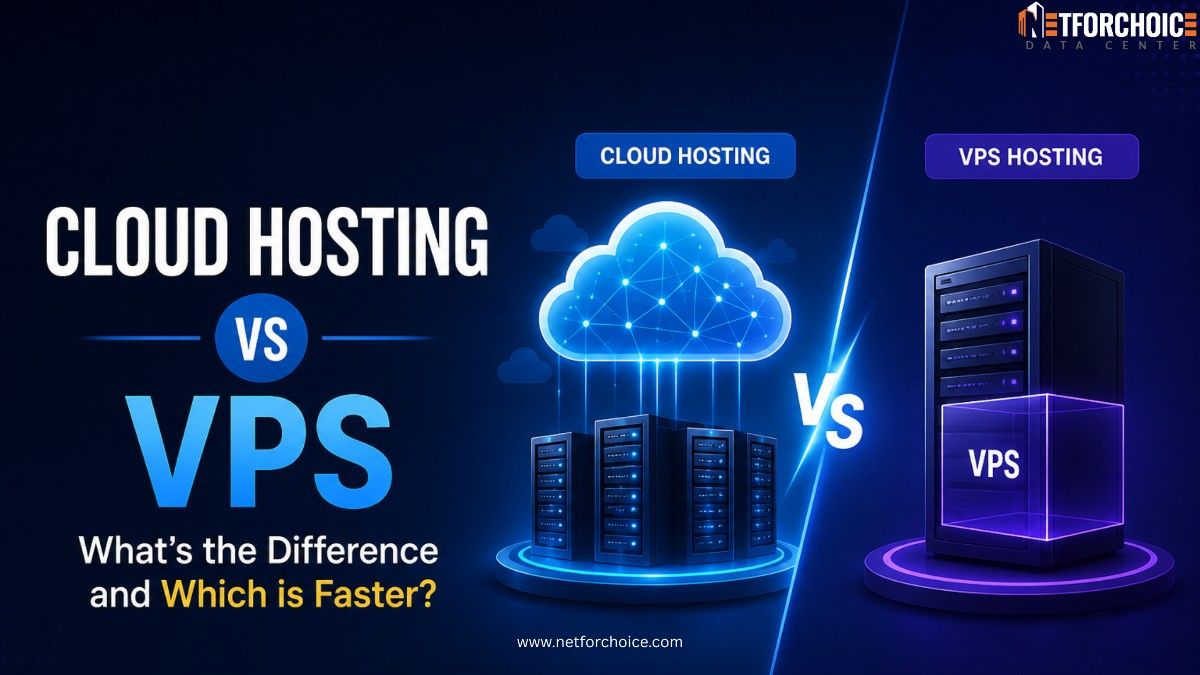


Choosing between cloud hosting vs VPS can feel like picking between two different cars both get you there, but they’re built for different drivers. Are you spinning up a fast-growing startup? Or running a stable site that just needs reliable power? The wrong choice costs you money. The right one speeds up your growth.
This guide cuts through the jargon. No fluff, no tech-speak. By the end, you’ll know exactly which option fits your need and which one is actually faster.
What is Cloud Hosting?
Cloud Hosting spreads your website across a network of multiple servers, not just one. Think of it like a power grid. If one power station goes down, others instantly pick up the load. Your site stays online no matter what.
Resources like RAM and CPU are pulled on demand from this pool. You only pay for what you use. Popular examples include AWS, Google Cloud, and DigitalOcean Droplets. It’s flexible, scalable, and built for unpredictable traffic.
What is VPS Hosting?
VPS Hosting, short for virtual private server, gives you a dedicated slice of a physical machine. One server is divided into several isolated environments. Your slice is yours alone. Nobody else’s traffic affects your performance.
A VPS sits between shared hosting and a dedicated server. You get root access, full control over your server environment, and consistent resources. It’s a popular choice for developers, growing businesses, and anyone who’s outgrown shared hosting.
Cloud Hosting vs VPS — Key Differences
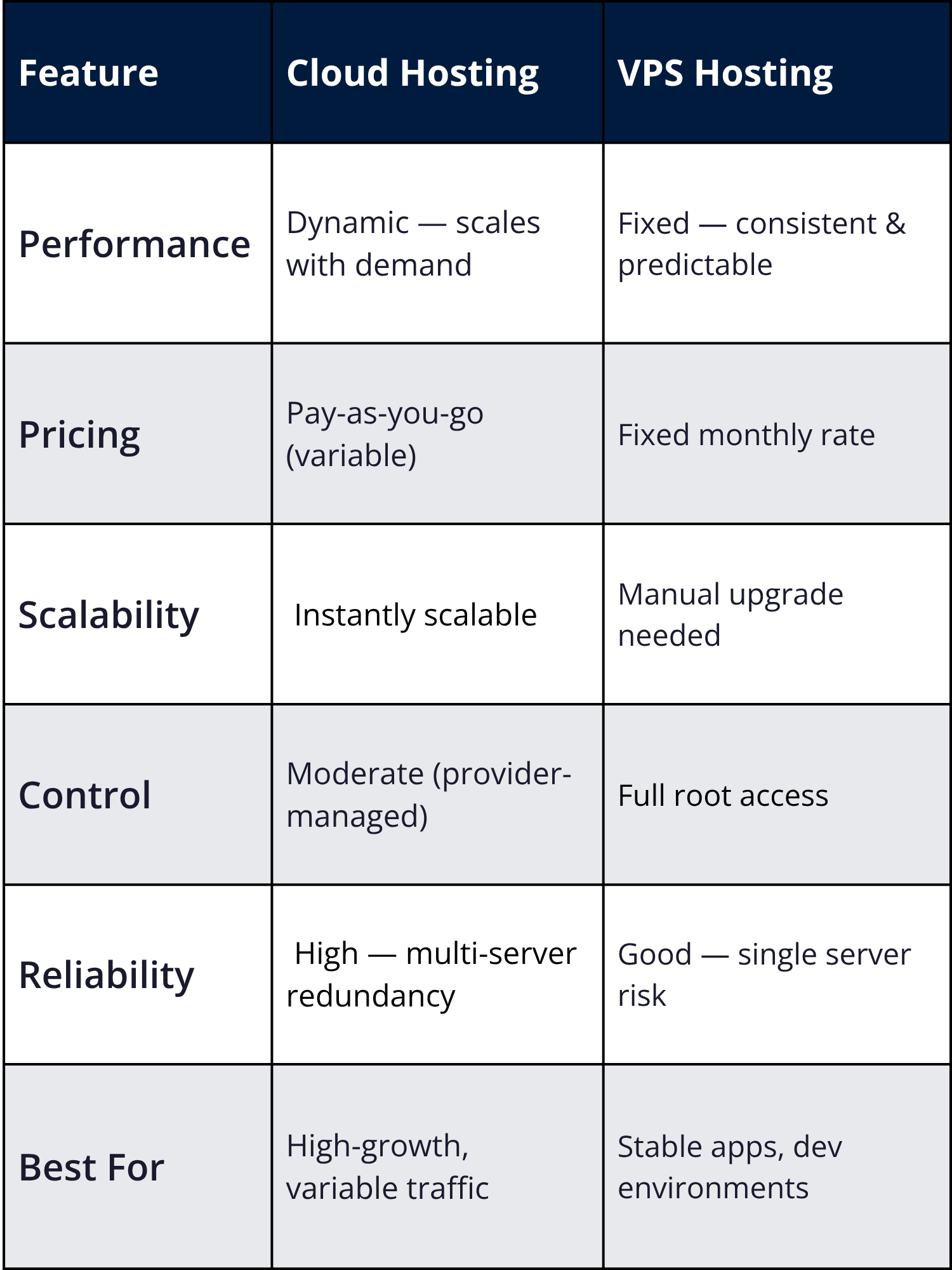
Which is Faster Cloud Hosting or VPS?
During a traffic spike, say a product launch or a viral post, cloud hosting is faster. It auto-scales resources in seconds. Your site won’t slow down because more servers kick in to handle the load. VPS hosting can’t do that automatically. If you hit your resource ceiling, your site slows down or crashes.
But for steady, predictable workloads, VPS hosting can be just as fast, sometimes faster. Because you’re not sharing dynamic resources with other cloud tenants, you get consistent performance with zero surprises.
For most modern web apps and e-commerce stores, cloud-based hosting has the edge on raw speed at scale. But a well-tuned virtual private server with SSD storage can absolutely outperform a poorly configured cloud setup.
When to Choose Cloud Hosting?
- You’re running a startup or SaaS product with unpredictable growth
- Your e-commerce store has seasonal traffic spikes (Black Friday, launches)
- You need global content delivery across multiple regions
- You prefer pay-as-you-go billing over fixed monthly costs
- You want maximum uptime even if one server fails, others take over
When to Choose VPS Hosting?
- Your traffic is steady and predictable, with no wild swings
- You’re running a mid-sized business website or agency project
- You need to host game servers, APIs, or custom applications
- You want a fixed monthly hosting cost — no billing surprises
- You’re a developer who needs full root access and custom server configs
Conclusion
So cloud hosting vs VPS — which wins? There’s no universal champion here. Cloud hosting is faster under pressure and scales effortlessly. VPS hosting gives you stability, control, and predictable costs.
Ask yourself one question: Is my traffic predictable? If yes, VPS hosting delivers great performance at a reliable price. If not, if your site could blow up overnight, cloud-based hosting has the infrastructure to keep you online and fast.
Both are excellent choices. The right one is simply the one that matches your website’s reality.