Understanding the Difference Between Cloud and Data Center
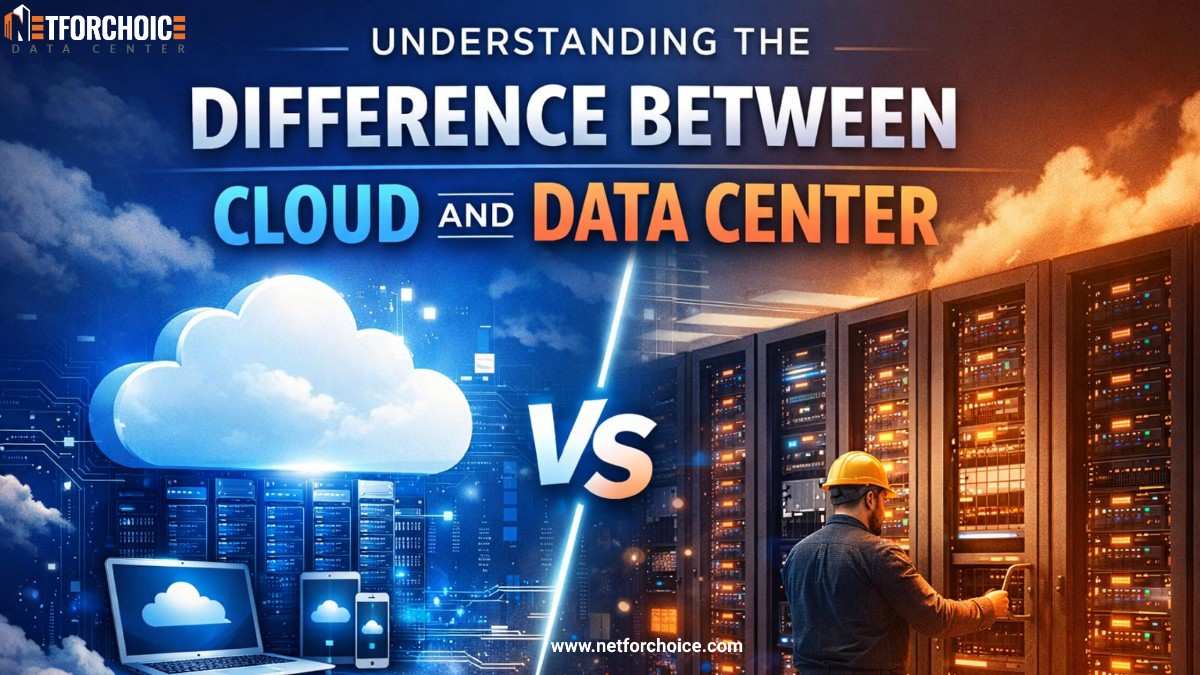


For modern businesses, storing, processing, and moving data has become a critical part of daily operations. From running websites and applications to managing customer information and analytics, organizations rely on powerful IT infrastructure to keep everything running smoothly. However, building and maintaining this infrastructure can quickly become expensive and complex. Companies must choose the right combination of hardware, software, and systems to create an efficient and cost-effective setup. This is where many organizations start exploring different infrastructure options and often come across the debate of cloud computing vs data center.
The first major decision businesses face when planning any IT project is where their data and computing resources should actually live. Traditionally, companies purchased servers and networking equipment and installed them inside their own facilities or private data centers. Today, thanks to virtualization and distributed computing technologies, businesses can also run their applications and store data on remote servers hosted by cloud providers. Because both approaches support similar business functions, many organizations find it difficult to clearly understand the difference between cloud and data center. Choosing the right model can impact cost, scalability, security, and overall business efficiency.
Read More: How Many Data Center in India
Key Differences Between Cloud and Data Center
-
Infrastructure Ownership and Management
Traditional data centers are typically owned or leased by organizations. Businesses must purchase physical servers, networking equipment, cooling systems, and storage devices. They are also responsible for maintaining the infrastructure, performing upgrades, and ensuring security.
Cloud infrastructure, on the other hand, is owned and managed by cloud service providers. Instead of purchasing hardware, businesses access computing resources such as storage, servers, and networking through the internet on a subscription or pay-as-you-go basis.
-
Security
Many organizations still prefer traditional data centers because they provide full control over infrastructure, systems, and sensitive data. By maintaining their own IT environment, companies can implement customized security policies and manage every aspect of their data protection strategy.
In contrast, cloud environments rely on service providers to manage infrastructure security, system reliability, and cyber protection. Businesses trust their cloud provider to maintain strong security frameworks, disaster recovery systems, and high availability.
However, both environments can offer strong protection when properly managed. Modern cloud platforms and enterprise data centers implement advanced security technologies such as encryption, access control, and monitoring systems to prevent data breaches and protect business information.
-
Cost
Building and maintaining a traditional data center requires significant upfront investment. Businesses must purchase servers, networking equipment, cooling systems, and backup infrastructure. In addition, ongoing expenses such as electricity, hardware upgrades, maintenance, and IT staffing can increase operational costs.
Cloud infrastructure works on a completely different financial model. Instead of investing heavily in hardware, organizations pay for computing resources based on their usage. This pay-as-you-go model allows businesses to control expenses more effectively and avoid large capital investments.
Because cloud providers handle maintenance, updates, and infrastructure management, businesses can reduce operational complexity while also improving cost predictability.
-
Customization
Traditional data centers offer complete control over hardware and software configurations. Organizations can design systems specifically tailored to their operational requirements, which is particularly useful for businesses running specialized or complex applications.
Cloud environments are built on an Infrastructure as a Service (IaaS) model, where users access virtualized computing resources provided by a third-party vendor. These resources are flexible and can be configured quickly according to business needs.
This makes cloud platforms highly adaptable and easy to deploy. Businesses can create servers, storage systems, and networks in minutes. However, in rare cases where extremely specialized infrastructure is required, some organizations may still prefer a traditional data center setup for deeper customization.
-
Scalability
In a traditional data center, scaling infrastructure usually involves purchasing new hardware, installing servers, expanding storage systems, and configuring additional networking resources. This process can take significant time and financial investment.
Cloud environments are designed for instant scalability. Businesses can increase or decrease computing power, storage capacity, and network resources almost immediately based on demand.
This capability is especially valuable for companies dealing with fluctuating workloads, large datasets, or rapid business growth. As organizations continue to generate more data and adopt digital technologies, cloud scalability helps ensure their systems can handle increasing workloads efficiently.
-
Maintenance and Upgrades
With traditional data centers, organizations must handle hardware upgrades, software patches, security monitoring, and system maintenance internally. This requires skilled IT professionals and continuous investment.
Cloud providers manage most of these responsibilities. They handle infrastructure upgrades, hardware replacement, security monitoring, and performance optimization. This allows businesses to focus more on innovation and core operations rather than IT maintenance.
Which Option is Better for Businesses?
Choosing between cloud infrastructure and traditional data centers depends on an organization’s size, growth plans, and operational priorities. Many modern businesses are moving toward cloud platforms because they provide scalable resources without requiring large investments in hardware or dedicated IT teams. Startups, digital platforms, and rapidly expanding companies benefit from the flexibility and efficiency of cloud environments. However, many enterprises still rely on traditional data centers to maintain full control over their systems, manage complex dependencies, and ensure strict security or compliance. For this reason, many organizations adopt a hybrid approach, using cloud services for scalability and backups while keeping critical workloads within their on-premises infrastructure.
Conclusion
Understanding the difference between cloud and data center helps businesses choose the right infrastructure for performance, security, and scalability. While the cloud offers flexibility and cost efficiency, traditional data centers provide greater control. Providers like NetForChoice Data Center deliver reliable, secure, and scalable infrastructure solutions, helping businesses manage workloads efficiently while supporting modern digital transformation needs.