What is the Meaning of Data Archiving? Benefits, Examples and Business

What is Data Archiving?
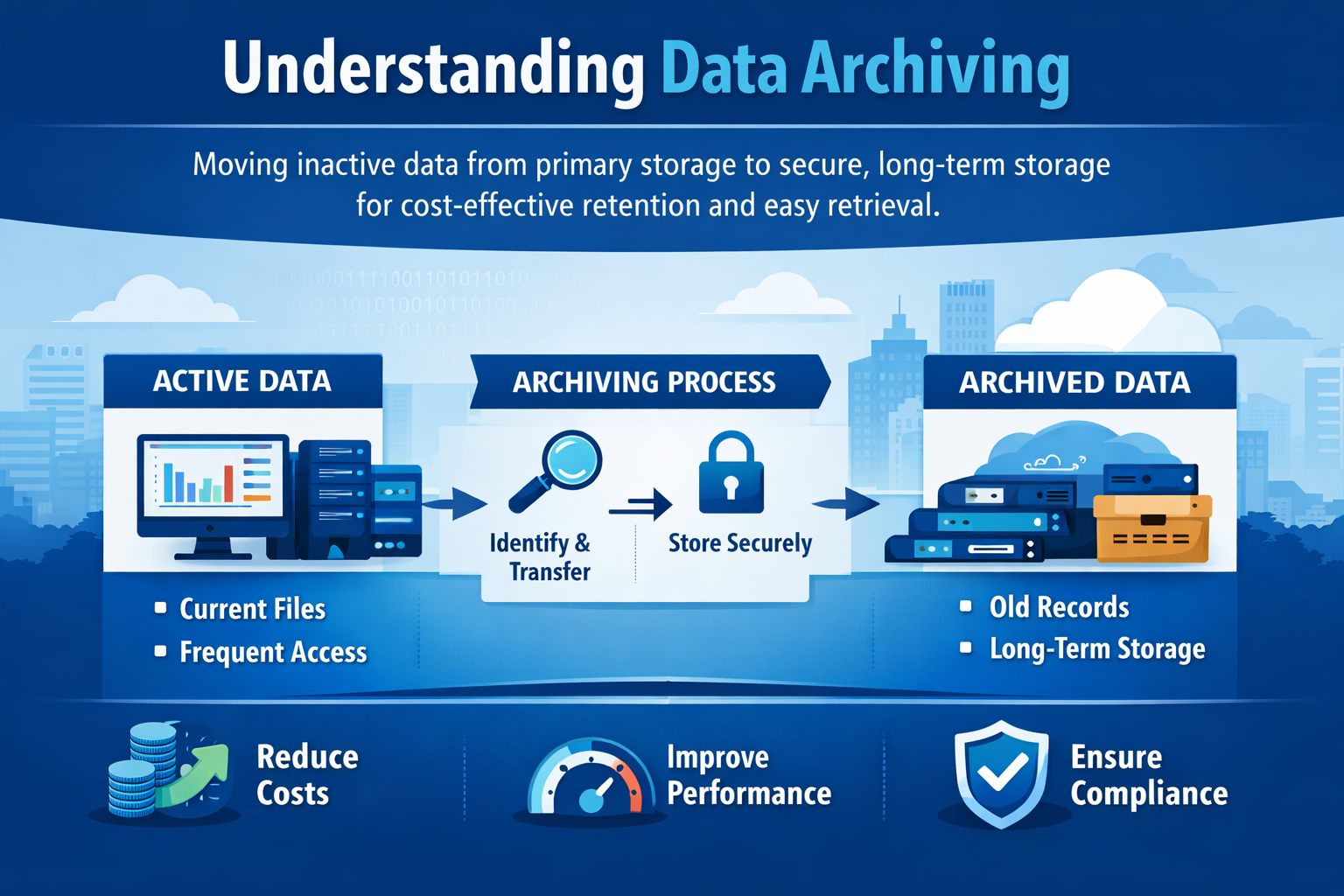
Data archiving is the process of moving inactive or rarely used data from primary storage to a secure, cost-effective storage system for long-term retention and easy retrieval.
In simple terms, it helps businesses store old but important data separately without affecting system performance or increasing storage costs.
Introduction
In today’s digital ecosystem, businesses generate a massive amount of data every day. Emails, customer records, financial transactions, and system logs continue to grow at an exponential rate. Over time, managing this data becomes a serious challenge.
Primary storage starts getting overloaded. Systems slow down. Costs increase. And finding critical information becomes difficult.
This is where data archiving becomes essential. It is not just a storage technique. It is a smart data management strategy that helps businesses stay efficient, compliant, and cost-effective.
Why is Data Archiving Important?
Most organizations do not realize the importance of data archiving until they start facing performance or cost-related issues. By that time, the damage is already done.
Data archiving helps prevent these problems before they occur.
When inactive data is moved out of primary storage, systems become faster and more efficient. Applications run smoothly. Database queries take less time. This leads to better overall performance.
At the same time, businesses can significantly reduce storage costs by moving old data to more affordable storage solutions. Instead of paying for expensive high-performance storage, archived data can be stored in cost-efficient environments.
Another critical benefit is compliance. Many industries require businesses to store data for a specific duration. Data archiving ensures that this information is securely stored and easily accessible when needed.
Data Archiving vs Data Backup
Many people confuse data archiving with data backup, but both serve completely different purposes.
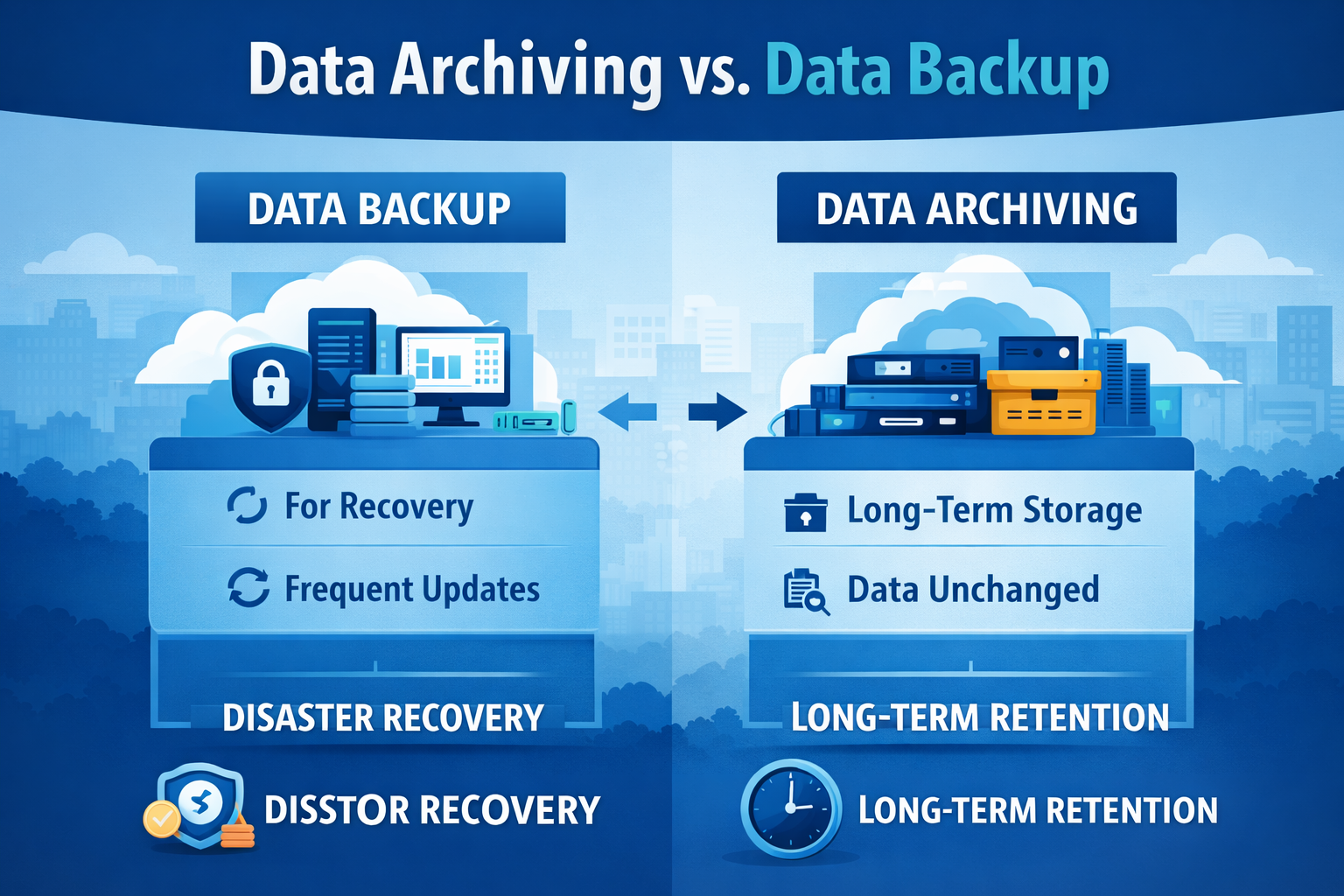
Data backup is used for disaster recovery. It creates copies of data so that it can be restored in case of system failure, cyberattack, or accidental deletion.
Data archiving, on the other hand, focuses on long-term storage of inactive data. Archived data is organized, indexed, and easily searchable.
Here is a simple comparison:
- Backup is for recovery
- Archiving is for long-term storage
- Backup data is frequently updated
- Archived data remains unchanged
Understanding this difference is important for building a strong data management strategy.
Key Benefits of Data Archiving
Improved System Performance: Removing inactive data from primary systems improves speed and efficiency. Systems perform better, and users experience faster response times.
Reduced Storage Costs: Archiving helps businesses move data to low-cost storage solutions. This reduces the overall infrastructure cost significantly.
Better Data Management: Organized and structured storage makes it easier to manage and retrieve data when required.
Regulatory Compliance: Data archiving ensures that historical records are stored securely and meet industry regulations.
Easy Data Retrieval: Modern archiving solutions allow quick access to stored data without complications.
Real-World Example of Data Archiving
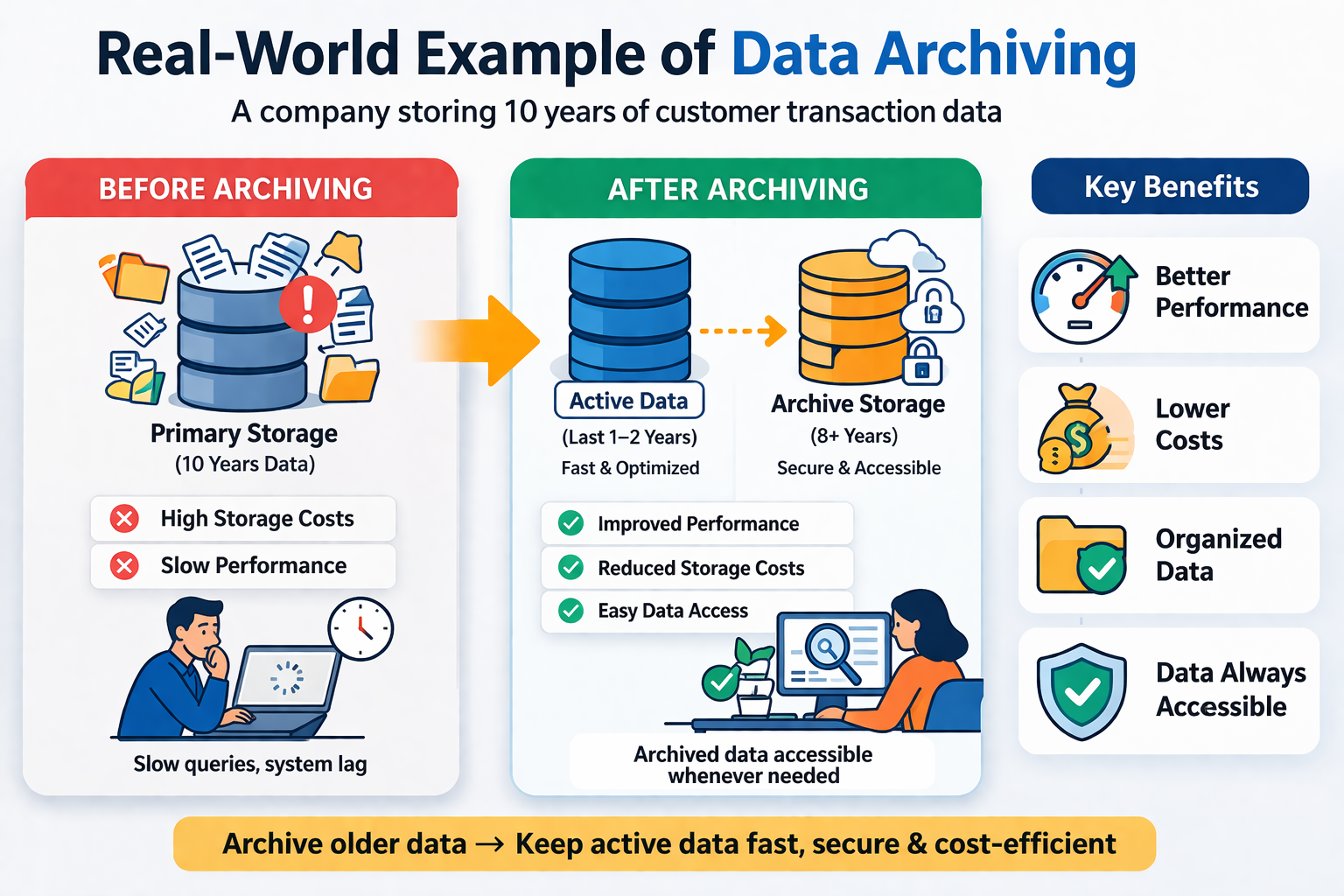
Consider a company that has been storing customer transaction data for the past 10 years. However, only the last 1–2 years of data is actively used.
If all this data remains in primary storage, it will increase costs and reduce system performance.
By implementing data archiving:
- Older data is moved to archive storage
- Active data remains in primary systems
- Performance improves
- Costs are reduced
At the same time, archived data remains accessible whenever needed.
Who Needs Data Archiving?
Data archiving is useful for businesses of all sizes.
- IT teams managing servers and storage
- Business owners looking to reduce costs
- Finance and compliance teams handling audits
- Companies using cloud or dedicated servers
If your business deals with growing data, data archiving is essential.
How Data Archiving Works
The process of data archiving starts with identifying inactive data. This data is then moved from primary storage to an archive system.
The archived data is indexed properly so it can be searched and retrieved easily. Many modern solutions also offer automation, allowing businesses to archive data based on predefined rules.
Cloud-based archiving solutions are becoming popular because they provide scalability, security, and flexibility.
Challenges Without Data Archiving
Without data archiving, businesses often face several challenges.
Storage costs continue to rise. System performance decreases over time. Data becomes difficult to manage. And compliance risks increase.
In some cases, businesses may even struggle to retrieve critical information during audits or emergencies.
How to Choose the Right Data Archiving Solution
Choosing the right solution is crucial for long-term success.
Businesses should look for:
- Scalable storage options
- Strong security and encryption
- Easy data retrieval
- Compliance support
- Cost-effective infrastructure
Cloud-based solutions are often the best choice because they reduce the burden on internal systems.
Need a Reliable Data Archiving Solution?
If your business is struggling with data overload, rising storage costs, or slow system performance, it is time to adopt a smarter approach.
NetForChoice offers secure, scalable, and cost-effective data archiving solutions designed to meet modern business needs. With advanced infrastructure and reliable support, businesses can efficiently manage and protect their data.
👉 Get in touch today to optimize your data storage and improve performance.