Colocation Hosting vs Dedicated Hosting: Which One Is Right for Your Business?
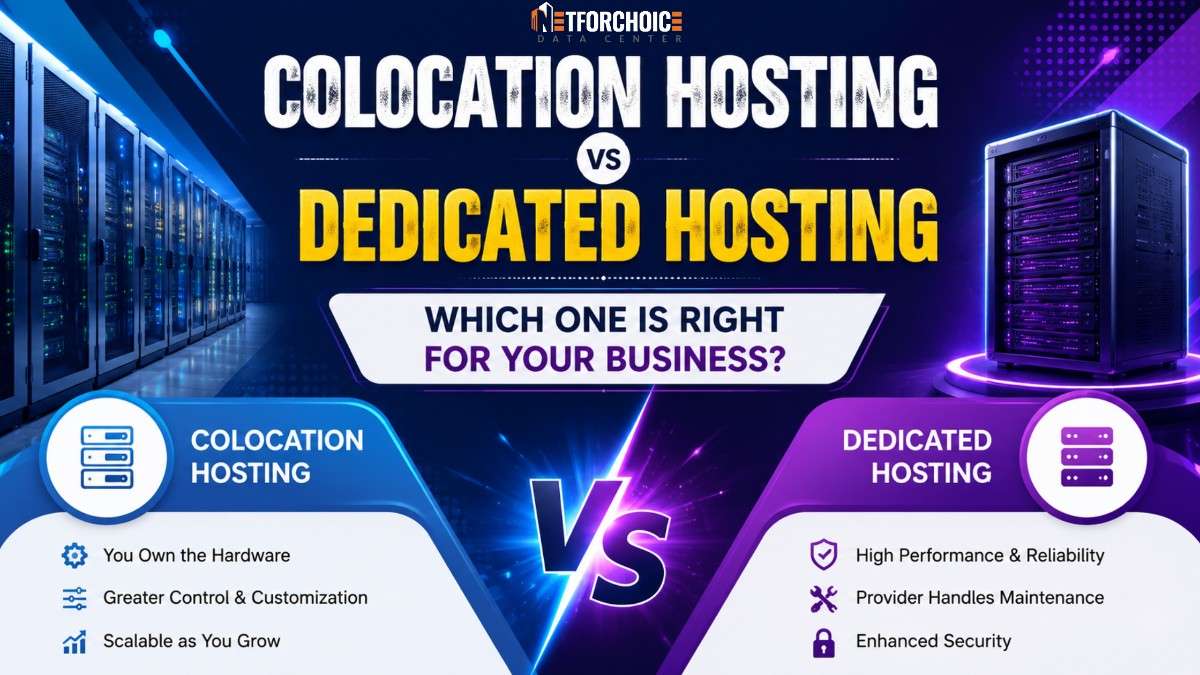


If you’ve been researching server infrastructure, chances are you’ve run into two terms that get confused constantly: colocation hosting and dedicated hosting. And it’s easy to see why both involve renting space in a professional data center, both give you serious computing power, and both sound nearly identical on the surface.
But the differences matter, especially when you’re trying to figure out which one is more budget-friendly, which delivers better performance, and which actually fits the way your business operates.
In this article, we’ll break down what colocation hosting and dedicated hosting actually are, compare them side by side, and help you walk away with a clear answer to the colocation vs dedicated server debate at least for your specific use case.
What Is Colocation Hosting?
Colocation hosting is a model where you own the physical server hardware, but instead of housing it in your own office or building, you rent rack space for it inside a professional data center.
The data center handles the essentials: power, cooling, physical security, and network connectivity. You bring your own servers, configure them however you like, and the facility simply provides the environment to keep them running reliably. Some colocation providers even let you choose your own internet service provider rather than locking you into theirs.
In short, colocation hosting gives you full ownership of your hardware paired with enterprise-grade infrastructure you’d struggle to replicate on your own.
What Is Dedicated Hosting?
Dedicated hosting flips the ownership model. Instead of bringing your own hardware, you rent an entire physical server — and only that server — from a hosting provider. Nobody else shares it; you get all the CPU, RAM, and storage to yourself.
The provider owns and maintains the physical machine, usually pre-installing an operating system before handing it over. They also handle power, cooling, and connectivity. From there, you’re free to install and manage your own applications or opt for a managed dedicated hosting plan where the provider handles maintenance for you too.
Think of dedicated hosting as renting the whole house instead of sharing an apartment you’re not splitting resources with any other tenant.
Colocation vs Dedicated Server: A Side-by-Side Comparison
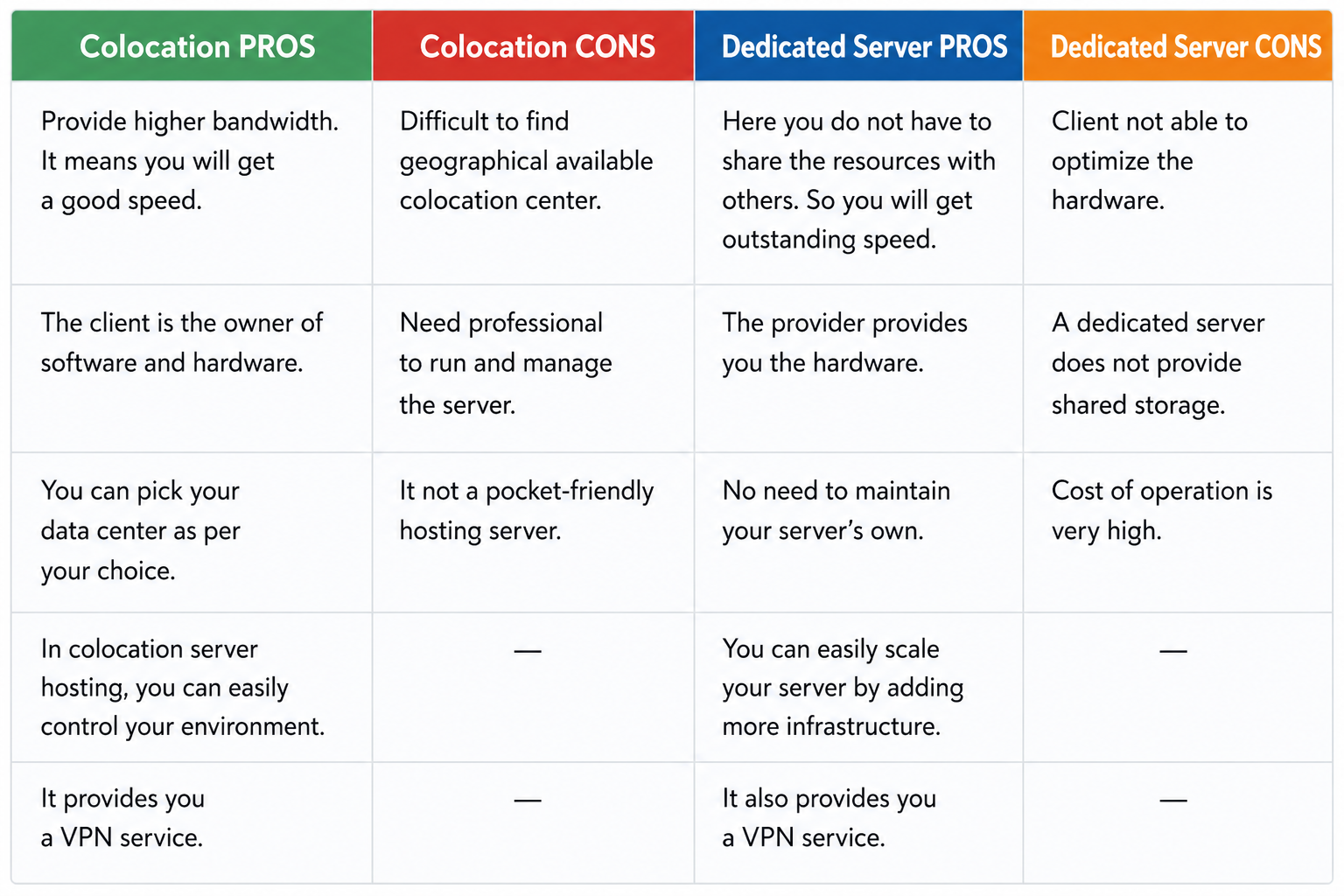
Colocation vs Dedicated Hosting: Which One Should You Choose?
The right choice ultimately depends on three factors: budget, control, and technical capacity.
Choose colocation hosting if: You already own (or are willing to invest in) your own hardware, want maximum control over your infrastructure, and have the in-house expertise or a trusted IT partner to manage and maintain your equipment long-term.
Choose dedicated hosting if: You want guaranteed, unshared performance without the upfront cost of buying hardware, and you’d rather let the provider handle physical maintenance while you focus on running your applications.
Larger enterprises with established IT teams and specific compliance or customization needs often lean toward colocation. Growing businesses that want dedicated performance without hardware investment tend to favour dedicated hosting instead.
Final Thoughts
The colocation vs dedicated server debate doesn’t have a one-size-fits-all winner it comes down to how much control you want versus how much responsibility you’re willing to take on.
Colocation hosting puts you in the driver’s seat with full hardware ownership and flexibility, while dedicated hosting offers powerful, hands-off performance backed by your provider’s infrastructure. Both options deliver serious performance gains over shared hosting environments the real question is which trade-offs fit your business best.
Evaluate your budget, your team’s technical capabilities, and your long-term scalability needs, and you’ll have your answer.