What Is an AI Data Center? The Future of Data Centers
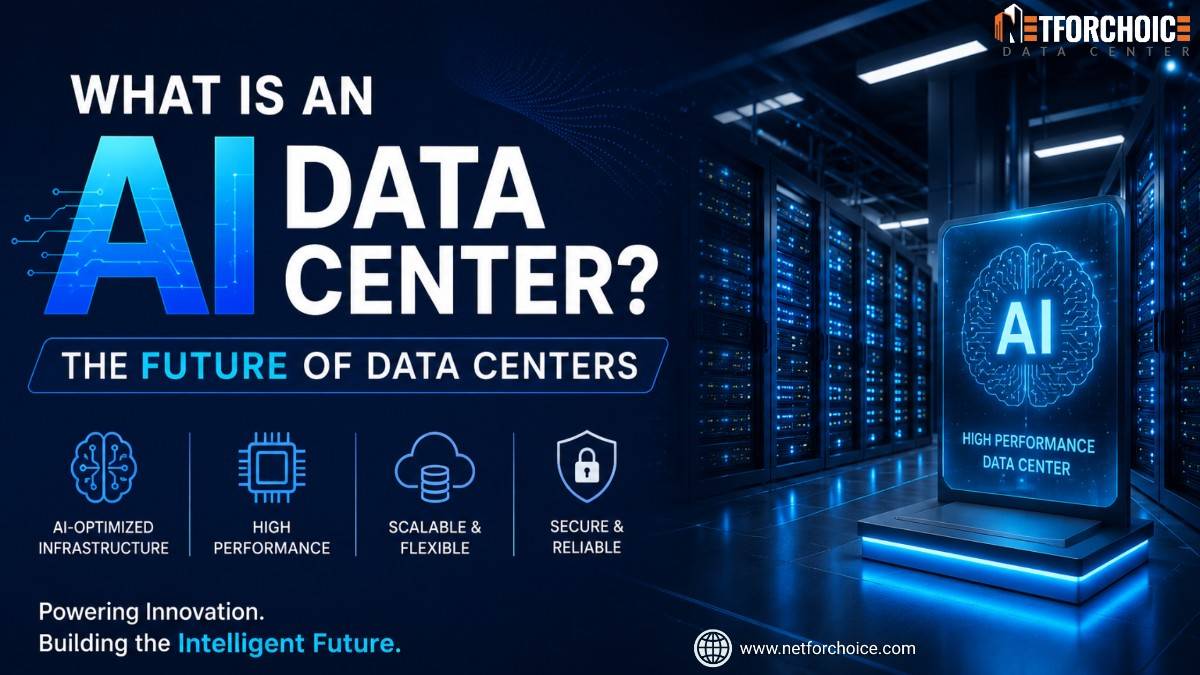


Every major leap in AI capability, from generative models to autonomous agents, is backed by a layer of infrastructure most people never see: the AI data center. As organizations move AI from pilot projects into core operations, the facilities running these workloads are being rebuilt almost from scratch. This blog breaks down what an AI data center actually is, how it works, and where this infrastructure is headed next.
What Exactly Is an AI Data Center?
An AI data center is a facility purpose-built to handle the unique demands of artificial intelligence workloads, training large models, running inference at scale, and processing massive volumes of data in real time. Unlike a conventional data center designed for general computing tasks, every layer of an AI facility is shaped around one goal: feeding compute-hungry models with data fast enough to keep them productive.
The hardware foundation looks different too. Instead of standard CPU-based servers, AI data centers lean heavily on GPUs and, in some cases, TPUs, both built for the parallel processing that machine learning demands. Around that compute layer sits high-throughput storage capable of keeping pace with constant data access, plus a networking fabric designed to move information between thousands of processors with minimal delay.
Equally important is what runs underneath the hardware. Software-defined networking, hyperconverged infrastructure, and automated orchestration tools allow these environments to scale dynamically, shifting resources to wherever a workload needs them at a given moment. This flexibility is what lets an AI data center support everything from model training to real-time inferencing without manual reconfiguration each time demand shifts.
The Three Ways Organizations Deploy AI Infrastructure
Not every business builds AI infrastructure the same way. Three deployment models dominate the landscape:
On-premises facilities give organizations full ownership of their hardware and data, which matters most for industries facing strict compliance or data residency rules.
Cloud-based AI infrastructure trades that direct control for elasticity, letting teams scale compute up or down as workloads change without large capital commitments.
Hybrid setups blend both, keeping sensitive workloads on-site while using cloud capacity for burst demand. This approach is increasingly common because it lets organizations balance cost, compliance, and performance rather than choosing one extreme.
At the facility level, two broader infrastructure strategies also shape how AI workloads get hosted. Hyperscale data centers, run mostly by large cloud providers, are built for massive scale and efficiency. Colocation facilities, by contrast, let multiple organizations share space, power, and cooling, making AI infrastructure accessible to companies that don’t need (or can’t justify) a hyperscale footprint of their own.
How an AI Data Center Differs from a Traditional One
- Architecture and performance
Traditional data centers run on standard servers built for a wide variety of moderate workloads. AI facilities are engineered around dense GPU clusters that need to communicate constantly, supported by intelligent resource management systems that allocate compute dynamically based on real-time demand. Traditional architecture, being more rigid, tends to bottleneck under this kind of intensive, parallel processing.
- Cost profile
Traditional facilities are cheaper to stand up initially but often rack up higher operating costs over time due to inefficiencies in how they handle modern, data-intensive applications. AI data centers cost more upfront, largely due to specialized hardware, but can deliver stronger long-term value when workloads are optimized properly.
- Energy and cooling
This is one of the sharpest divides between the two. AI-grade GPUs consume significantly more power per processing cycle than the CPUs found in conventional servers, which means AI facilities need to be designed around energy efficiency and advanced cooling from day one, not retrofitted later.
Security Risks That Come With AI Infrastructure
Running AI workloads introduces security concerns that go beyond what most traditional facilities face:
- Data exposure: training datasets often contain sensitive or proprietary information that becomes a high-value target.
- Larger attack surface: distributed systems and specialized accelerators add more entry points to defend.
- Model theft: trained models themselves can be reverse-engineered, stolen, or tampered with.
- Compliance complexity: the scale and sensitivity of AI data make regulatory adherence harder to manage.
- Supply chain risk: dependencies on specialized hardware and software introduce vulnerabilities outside an organization’s direct control.
Many organizations address these risks by keeping AI workloads on-premises or in hybrid environments, where they can maintain tighter control over data, apply customized security policies, and integrate AI systems with existing security tools rather than starting from zero.
Why Demand Is Accelerating
Several forces are pushing organizations toward AI-ready infrastructure faster than expected. Generative AI adoption has moved from experimentation to production in most industries. Agentic AI — systems capable of autonomously executing multi-step tasks is placing sustained, continuous demand on infrastructure rather than the occasional bursts traditional applications produce. At the same time, businesses increasingly need real-time analytics to support decision-making, which legacy infrastructure simply isn’t built to deliver at the necessary speed.
What’s Next for AI Data Centers
Looking ahead, a few trends are shaping where this infrastructure goes next. Edge computing is bringing inference closer to where data is generated, reducing latency for time-sensitive applications. Energy efficiency is becoming a design priority rather than an afterthought, with advanced cooling and smarter power management helping offset the steep energy demands of GPU-heavy workloads. And as agentic AI becomes more widespread, infrastructure will need to support always-on, continuous processing rather than the more predictable patterns of past applications.
Conclusion
AI data centers represent a fundamental shift in how computing infrastructure is designed, built around the specific demands of AI rather than general-purpose flexibility. For IT leaders and decision-makers, the question isn’t whether AI workloads will require this kind of infrastructure but how soon to invest and through which deployment model to stay competitive as AI becomes core to business operations.